
Transportation
Central database of roads
The road network model information system ensures all CTEPK services.
Transportation
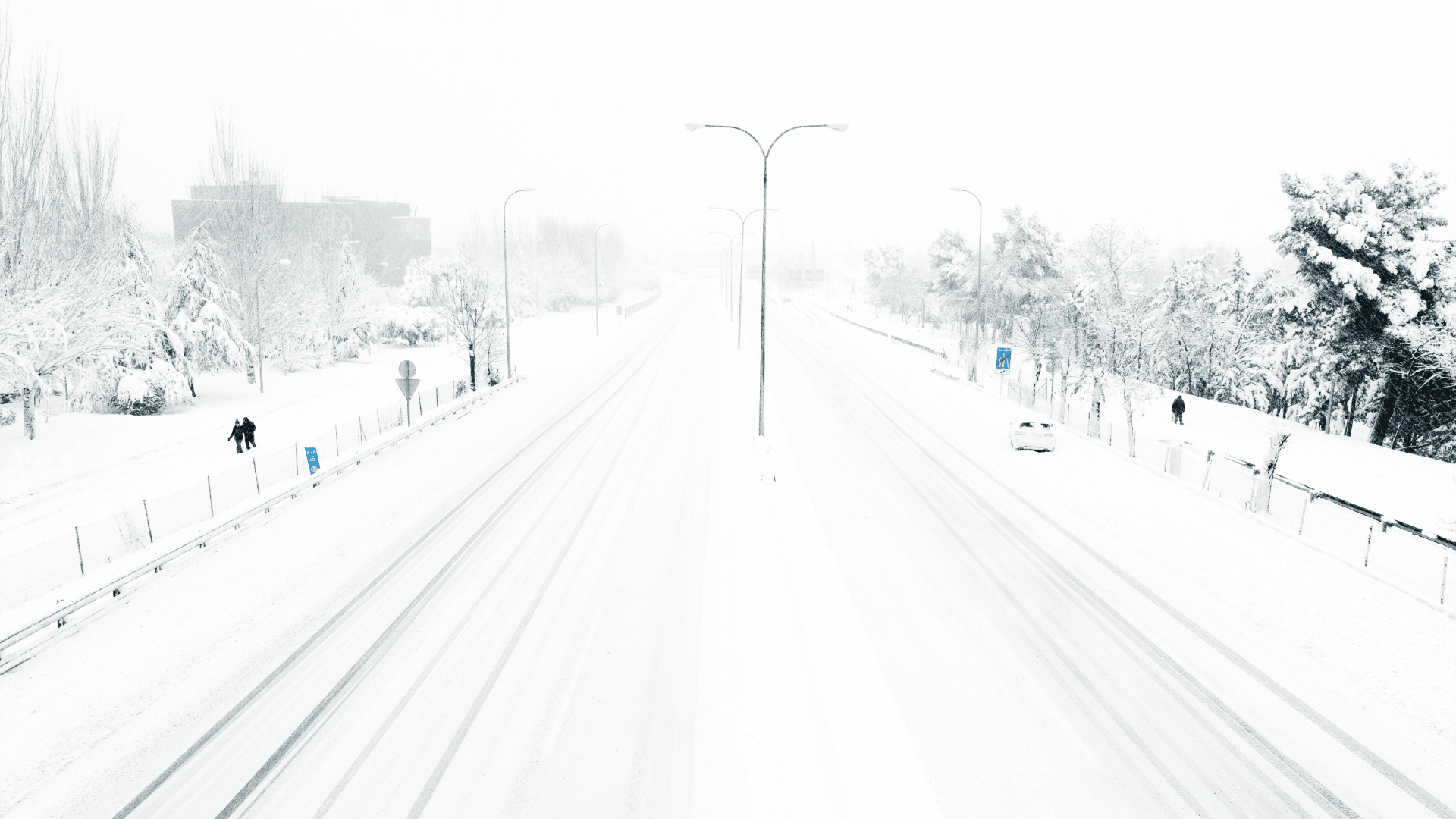
Winter road maintenance is one of the key responsibilities of every road authority from autumn through spring. Its purpose is to keep roads safe and passable for drivers and other road users. Removing ice by salting and clearing snow by ploughing requires significant financial resources.
Each winter maintenance vehicle deployment should be based on careful planning and effective coordination by the control centre. If de-icing material is applied too early, it may be dispersed by traffic and wind or diluted by rain. If it is applied too late, the road surface may freeze.
Moving from a reactive to a proactive approach requires decisions to be based on predicted road surface conditions several hours in advance. Producing such forecasts requires key weather parameters to be measured by specialised weather stations installed at strategic locations across the road network. The collected data is then processed using a dedicated mathematical model developed for winter road maintenance.
The more weather stations are deployed across the road network, the more accurate the forecasts can be. Conventional road weather stations, however, are expensive to purchase and operate. They are large, difficult to install and require either a permanent power supply or very large photovoltaic panels.
OUR SOLUTION
SOFTEC therefore designed and developed a new range of low-cost IoT weather stations specifically for winter road maintenance. Their low acquisition and operating costs make it possible to deploy them densely across the road network.
The stations measure key parameters such as air temperature, relative humidity, dew point and road surface temperature, with additional measurements available as optional features. Some parameters, such as the temperature below the road surface, are calculated using advanced algorithms.
The stations are designed for quick and easy installation. They are highly energy-efficient and can operate with a small solar panel or solely on batteries for several years. They can be mounted on almost any streetlight pole or traffic signpost within a few minutes. The measured data can be transmitted through wireless networks such as NB-IoT or LoRaWAN.
The more accurate forecasts provided by ROWES Meteo have helped reduce accident rates by up to 28%.
Thanks to the integrated cameras, dispatchers have a much clearer overview of current road conditions. They can see whether a specific location is freezing or is expected to freeze, and whether the road surface temperature is currently falling or is forecast to drop below freezing.
The cameras also provide a direct view of the road and its surroundings, reducing the need for physical inspections in the field. This is particularly important because SC BSK manages a highly diverse road network, where different locations may experience very different weather and temperature conditions at the same time.
For SC BSK, a proactive approach to winter maintenance is essential. It enables better preparation for deteriorating conditions and makes preventive road treatment possible. This reduces the amount of de-icing material required and helps lower costs.
The solution also has significant long-term potential to deliver further financial savings while reducing the environmental impact of winter road maintenance.